
LHDN e-Invoice Phase 4 (2026): What Malaysian SMEs Need to Know
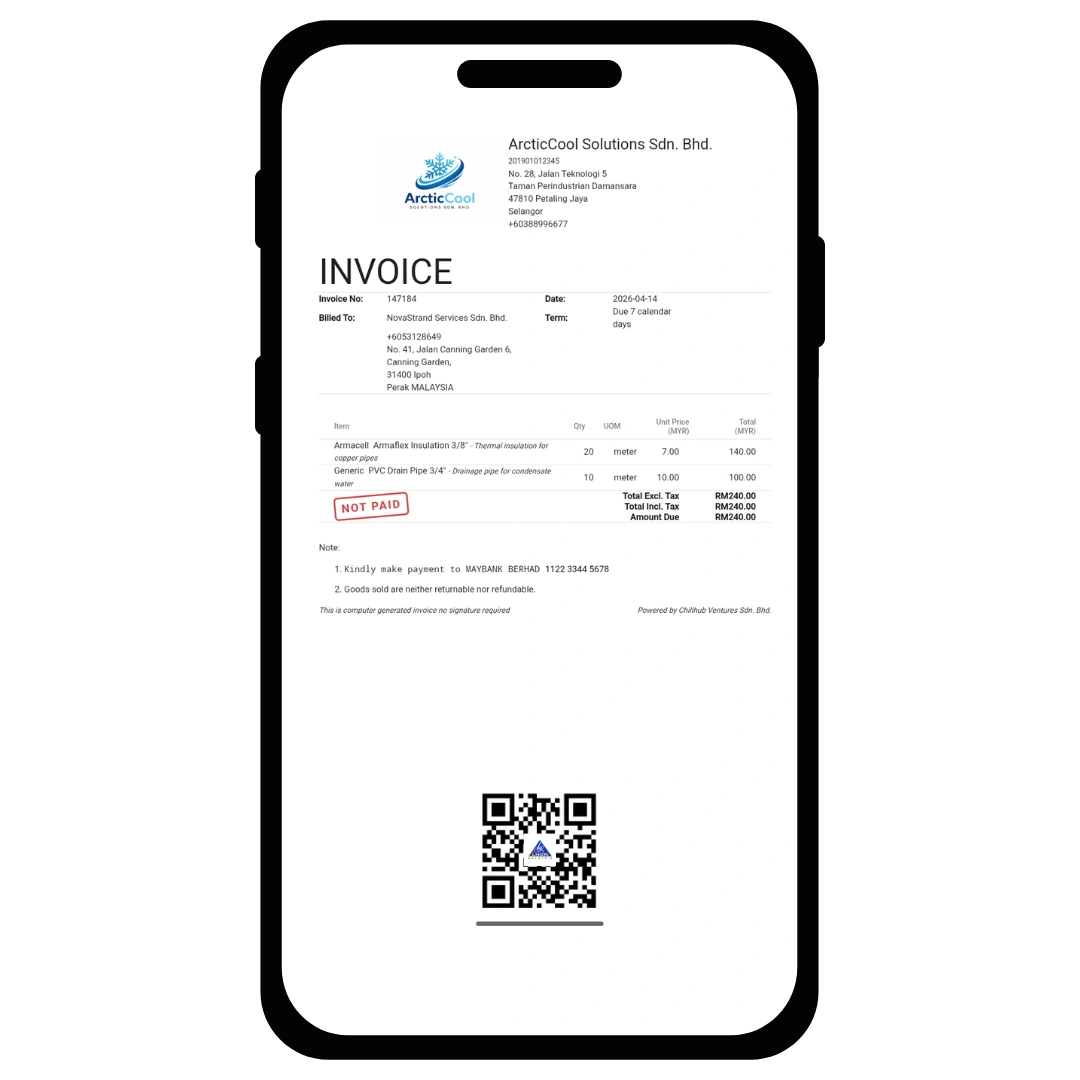
Phase 4 of Malaysia's e-Invoice mandate started on 1 January 2026 for businesses with annual turnover between RM1 million and RM5 million. LHDN also raised the exemption threshold from RM500,000 to RM1 million on the same date, and extended the no-penalty relaxation period to 31 December 2027. Here's exactly what that means for your business, in plain terms.
What Is LHDN e-Invoice, Quickly?
LHDN's e-Invoice mandate requires Malaysian businesses to issue invoices in a standardised digital format, submitted through the MyInvois platform, instead of a free-form PDF or paper invoice. It's being rolled out in phases based on annual turnover, largest businesses first, so every business eventually has to comply — the only question is when your phase starts and what the rules are during the transition.
The Phase Timeline So Far
| Phase | Annual Turnover | Mandatory Start |
|---|---|---|
| Phase 1 | Above RM100 million | August 2024 |
| Phase 2 | RM25 million – RM100 million | January 2025 |
| Phase 3 | RM5 million – RM25 million | July 2025 |
| Phase 4 | RM1 million – RM5 million | 1 January 2026 |
If your business turns over less than RM1 million a year, the good news is below.
What Actually Changed in 2026
1. Exemption threshold raised: RM500,000 → RM1 million
Effective 1 January 2026, businesses with annual turnover under RM1 million are exempt from mandatory e-Invoice compliance — up from the previous RM500,000 cutoff. This is genuine relief for a large slice of Malaysia's smallest businesses. It's also more settled than it sounds: a previously-planned "Phase 5" that would have brought RM500,000–RM1 million businesses into the mandate was formally cancelled following the Cabinet's December 2025 decision, so this isn't a temporary pause before a future phase catches up to you.
2. Relaxation period extended to 31 December 2027
The mandatory start date for Phase 4 (RM1M–RM5M businesses) is still 1 January 2026 — that hasn't moved. What's been extended is the penalty-free grace period: no penalties under Section 120 of the Income Tax Act 1967 will be imposed for non-compliance during this window, and businesses can issue consolidated e-invoices (including for B2B transactions) with more flexible product/service descriptions in the meantime. This window was reconfirmed — and extended by a further 12 months from an earlier 31 December 2026 cutoff — in a Prime Minister's announcement on 20 April 2026, so penalty enforcement under Section 120 now begins 1 January 2028.
Do You Need to Comply? Quick Check
- 1Annual turnover under RM1 million? You're exempt from mandatory e-Invoice — and the once-planned Phase 5 that would have covered this bracket was cancelled, so it's not a temporary reprieve. Voluntary early adoption is still allowed and can simplify things once your business grows past the threshold.
- 2Annual turnover RM1M–RM5M? You're in Phase 4 — mandatory since 1 January 2026, with penalty relief until 31 December 2027.
- 3Annual turnover above RM5 million? You should already be fully compliant (Phase 1–3) — check with LHDN directly if you're unsure of your status.
- 4Not sure of your exact turnover bracket? Check the official LHDN e-Invoice implementation timeline or speak to your accountant.
What Should Phase 4 Businesses Do Right Now?
Even with penalty relief until end of 2027, waiting until the last minute creates its own risk — LHDN submission has to be built into your invoicing workflow, not bolted on afterward. Businesses that get it working early avoid a scramble later and start benefiting from the side effect most SMEs don't expect: e-Invoice compliance forces you to clean up customer records, standardise how invoices are issued, and often exposes exactly how much manual re-keying was happening in the background.
Frequently Asked Questions
Is my business exempt from LHDN e-Invoice in 2026?
If your annual turnover is under RM1 million (raised from RM500,000 effective 1 January 2026), you're exempt from mandatory e-Invoice compliance — and the planned Phase 5 for this bracket was cancelled in December 2025, so this exemption isn't just a temporary pause.
What is the e-Invoice relaxation period?
It's a penalty-free window — no fines under Section 120 of the Income Tax Act 1967 for non-compliance — that runs until 31 December 2027 for Phase 4 businesses, reconfirmed and extended by a further 12 months in a Prime Minister's announcement on 20 April 2026. It does not remove the requirement to comply; it removes the immediate penalty risk while businesses transition.
What happens if I don't comply and the relaxation period ends?
After the relaxation period, non-compliance risks penalties under the Income Tax Act. It's safer to have e-Invoice submission working well before the deadline than to start the transition after enforcement tightens.
Can I issue consolidated e-invoices during the relaxation period?
Yes — during the relaxation period, Phase 4 businesses can issue consolidated e-invoices for transactions including B2B, with more flexible product/service description requirements than the final rules will require.
Does e-Invoice software need to be separate from my accounting or job management system?
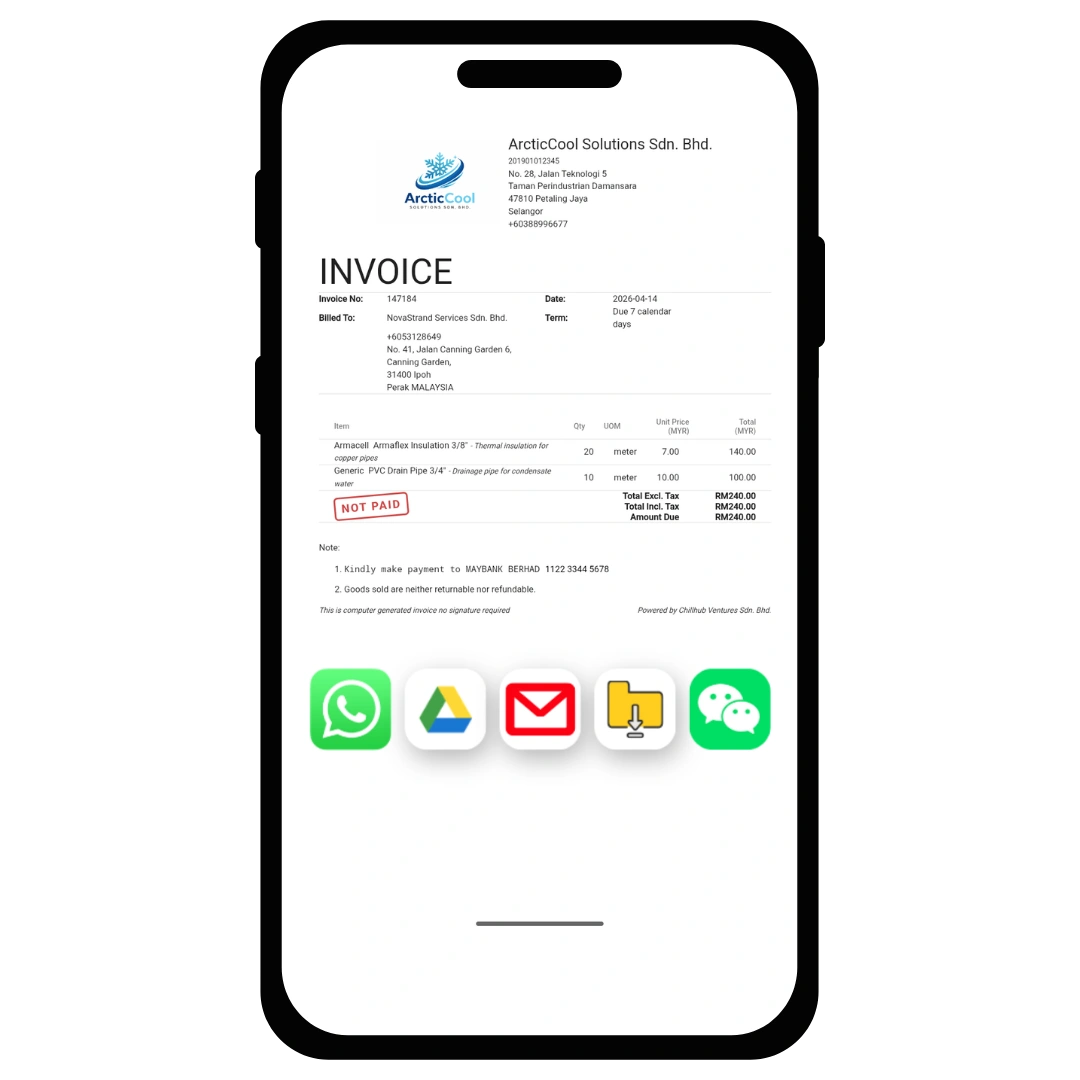
No — it doesn't have to be. Platforms like Chillhub build LHDN e-Invoice submission directly into the invoicing flow (job scheduling → invoice → auto-submit to LHDN), so there's no separate portal or manual re-entry step.
The Bottom Line
If your turnover is under RM1 million, 2026's threshold change is genuinely good news — you're exempt for now. If you're in the RM1M–RM5M Phase 4 bracket, the mandatory start date has already passed (1 January 2026), but you have penalty relief until the end of 2027 to get your systems in order. Either way, the businesses that build e-Invoice into their normal invoicing workflow now — rather than treating it as a separate compliance task — are the ones who won't be scrambling when enforcement tightens.
LHDN e-Invoice, Built In — Not Bolted On
Enter customer info → send the invoice → auto-submit to LHDN. No separate portal, no manual re-entry. Full access, 30 days.